
Sooner or later I was going to have to post my two cents‘ worth on the Internet of Things (short: IoT), and here it is. And for the lexically challenged or those who can’t be bothered to read the whole thing here’s the summary: Most of it is strictly for the birds. „Smarthome – the Truth 2.0“ weiterlesen
Time to Boycott Dell in Hong Kong/Macau?
I’ve had a relationship with computers since the dawn of consumer PC’s; longer than I’ve been married, in fact. And neither marriage nor buying a new laptop are an easy thing in my universe. So here I am, trying to buy a new laptop and browsing the net from one end of the world to the other looking for, well, at least a decent compromise. „Time to Boycott Dell in Hong Kong/Macau?“ weiterlesen
7 Thoughts on Language Teaching
What’s worse than a teacher who can’t apply best practices in the classroom? A teacher trainer waffling on in front of his trainees about said practices with a power point presentation full of copied text. With that gruesome image in mind, here are some of my thoughts, condensed to a cognitively friendly 7 items.
- Don’t waffle (or blabber, drone on, lecture…); yes, students can benefit from your input, but it’s production they need most (whether as language students or teacher trainees)
- Don’t put up PPT’s filled with text – that’s what we have handouts for; power point is a visual tool
- Focus – I’m sure someone out there cares about your amazing anecdotes from life as an ESL teacher in rural Mongolia but really, how does it tie in with the learning outcomes?
- Wikipedia, Salon.com and your various TEFL newsletters are not sources of wisdom – they’re how you pass the time in the teacher’s room; closely related to points 1-3 above
- There is no correlation between being a native speaker and being a good teacher
- There is a correlation between personality variables and being a good teacher – but Cambridge & Co. can’t sell you a certification for that so it doesn’t get as much attention as it should
- Never confuse language ability (or lack thereof) with overall intelligence – any group of people will contain a wide range of abilities and strengths; your job is to empower, not judge them
Galaxy S6 vs Iphone 6 – the comparison that matters
So I finally motivated myself to go over to the local telecom shop and take a look at the new Galaxy S6 and its sibling with the curved display. Great looking devices, even if the curved display seems pretty pointless. The S6, well, plenty of reviewers have already gone over it with a fine tooth comb – it’s clearly Samsung’s finest achievement so far. It’s a great looking phone; it feels good in the hand and it’s quick as can be. I mean, really, I love my iPhone 6+, but it actually felt rather clunky after playing with the S6.
But here’s the thing: it’s still running Android and it’s still a Samsung. My Galaxy S3 is lying in a drawer at home, where it serves as a rarely used backup and loaner device. And were it not for Cyanogen Mod, it wouldn’t even be doing that – it would be on top of my desk, holding down some papers.
When Samsung decided not to offer anymore updates less than a year after I bought it, I swore I’d never buy another phone that didn’t come with security updates rolled out in a timely manner and an operating system that’s current for at least a couple of years. This isn’t about being a fanboy for anyone; I’m an agnostic, through and through. It’s simply a matter of security and longevity for my devices and the software they run. And that’s my verdict: the S6 is a great phone all around but Android and Samsung fall short on the most basic requirements for a connected device that holds vital data. This is where all comparisons should start and end.
Video Test
Knocking Surface
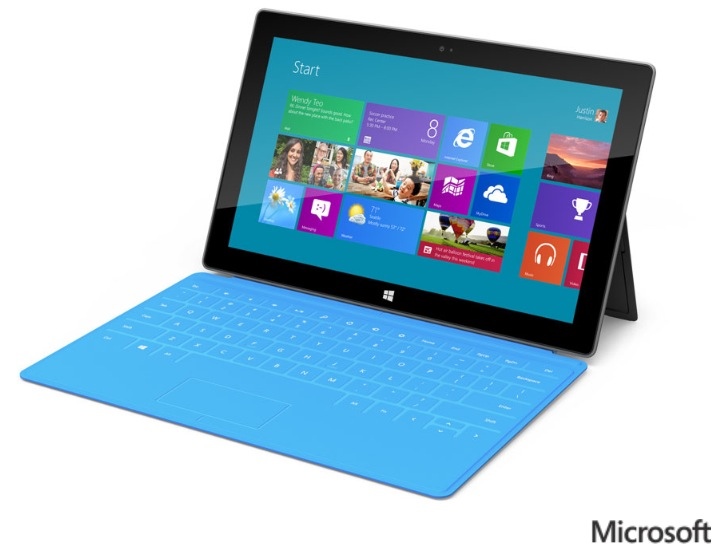
Microsoft has finally announced an in-house tablet that might just do what my iPad, despite being a great piece of technology, can’t: bridge the gap between entertainment device, e-reader and business tool.
A while ago, I was looking at a post by the Apple fanboys over at cultofmac where they were knocking Microsoft yet again. What they fail to account for (as do many others among the Apple fanboys for more or less sponsored reasons), is that half a million apps is about 499,988 more than I really need. I own 2 laptops, a desktop gaming rig, a Galaxy S, iPad 2 and iPhone 4. Guess what: on both my iOS devices and the Android phone, I use at most a dozen apps 99.9% of the time. As long as those apps do their job well, I’m fine. Except that they don’t, because they don’t have MS Office and my iOS devices are only fully functional with a jailbreak.
Food for Thought…
This news should hardly come as a surprise: Many college students not learning to think critically